


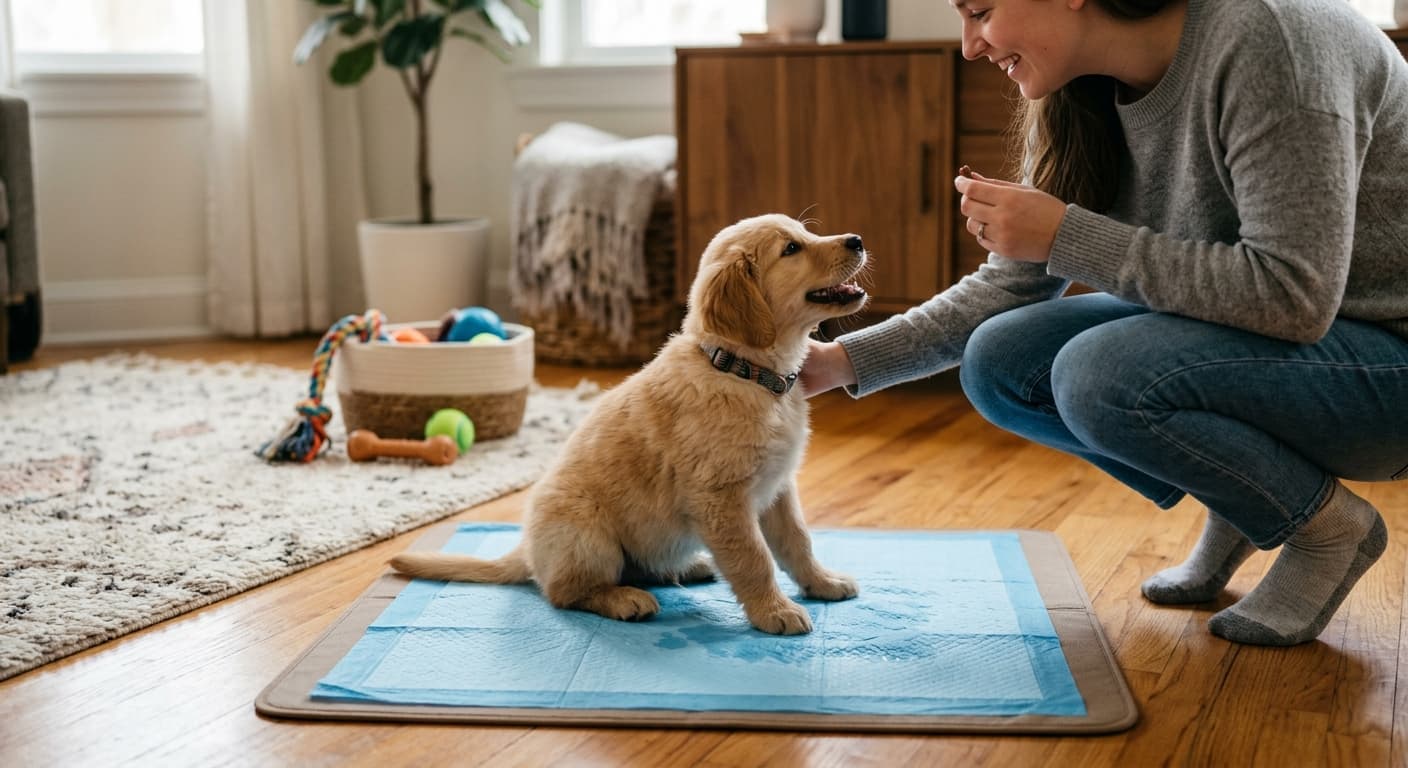
A new puppy does not automatically understand that one small pad on the floor is the right place to go to the toilet. From the puppy’s point of view, the pad is simply another object in a new home full of unfamiliar things.
That is why learning how to train a puppy to use pee pads is mostly about making the correct place easy to recognize. The pad needs to stay in a consistent location, bathroom breaks need to happen at predictable times, and the puppy needs a clear response when they get it right.
Accidents will still happen, especially at the beginning. The aim is not to avoid every mistake from day one. It is to create a routine the puppy can gradually understand and follow.
What Are Puppy Pee Pads?
Puppy pee pads are absorbent pads designed to provide a designated indoor toilet area for dogs. They can be particularly useful when a puppy cannot always be taken outside quickly, such as during the first weeks at home or when living in an apartment.
There are different options available, including disposable and reusable pads. When comparing the Best Puppy Training Pads, think about the size of your puppy, the space available at home, absorbency, and how you plan to manage cleaning.
The pad itself, however, is only part of the process. Simply putting one on the floor does not tell a puppy what to do with it. They still need to learn that this particular place is where bathroom breaks should happen.
Why Use Pee Pads for Puppy Training?
Pee pads can make indoor potty training easier to manage, particularly when immediate outdoor access is difficult.
A young puppy may need frequent bathroom breaks, and owners cannot always reach an outdoor toilet area in time. Having a designated indoor spot can provide another option while the puppy is learning a routine.
Disposable Pet Training Pads can also help protect floors and make accidents easier to manage during this stage.
The important point is consistency. If the pad moves between several rooms or the puppy is sometimes encouraged to use it and sometimes discouraged, learning becomes harder. Decide what role pee pads will have in your routine before you begin.
When Should You Start Pee Pad Training?
Training can begin when your puppy comes home.
The early stage should be simple. Choose the toilet area, introduce your puppy to it, and start taking them there at the times when they are most likely to need a bathroom break.
Young puppies are still developing bladder control, so expectations need to be realistic. Frequent accidents do not necessarily mean the puppy is failing to learn.
Owners searching for how to puppy pad train often focus on how quickly the puppy can learn. A more useful measure is whether the puppy is gradually becoming more consistent.
What You’ll Need Before You Begin
You do not need a complicated setup.
Start with suitable pee pads and choose a fixed location that is easy for your puppy to reach. Keep the pad away from their sleeping and feeding areas where possible, and make sure other household items do not make the toilet area difficult to identify.
Cleaning supplies are also important because accidents away from the pad need to be cleaned properly.
If you are preparing for a new puppy, an Online Pet Shop in Dubai such as Cheetah Pets Supplies can be a convenient place to find training and everyday pet-care essentials.
Once the basic setup is ready, consistency matters more than adding more products.
Step-by-Step Guide to Pee Pad Training
If you are wondering how to train puppy to pee on pad, begin by making the correct choice easy for them.
First, choose one regular location for the pad. Moving it around the home can make it harder for a puppy to understand where they are expected to go.
Next, take your puppy to the pad at predictable times. After waking up, eating, drinking, and active play are useful moments to pay closer attention. You may also notice signs that your puppy needs to go, such as sniffing the floor, circling, becoming restless, or moving away from play.
When you see those signs, calmly guide the puppy to the pad.
Give them a little time rather than immediately turning the visit into play. When they use the pad correctly, reward them soon afterwards. The puppy needs to connect the positive response with the behaviour that just happened.
A puppy pee pad training schedule does not need to be complicated. What matters is that bathroom opportunities happen regularly enough for your puppy to practise the correct behaviour.
This is also the basic principle behind how to train a puppy to use puppy pads successfully: make the right place predictable and reward the puppy when they choose it.
As the routine develops, Puppy Training Pads should become a familiar part of the toilet area rather than something that appears only after an accident.
Common Pee Pad Training Mistakes to Avoid
One of the easiest ways to confuse a puppy is to keep changing the rules.
If the pad is in the kitchen one day and beside the front door the next, the puppy has to work out both what the pad means and where to find it. A stable location makes the lesson simpler.
Another common problem is giving a young puppy too much unsupervised freedom. If they can wander through several rooms, you may not notice the signs that they need a bathroom break until it is too late.
Punishing accidents can also work against the training. A puppy may become nervous about going to the toilet in front of you without understanding that the location was the problem.
If your puppy won’t use pee pad consistently, look at the routine before assuming they are being difficult. The pad may be too far away, bathroom breaks may be poorly timed, or the puppy may simply need more repetition.
How Long Does Pee Pad Training Take?
There is no exact number of days that applies to every puppy.
Age, previous habits, routine, supervision, and the individual dog can all influence progress. Some puppies understand the purpose of the pad relatively quickly but still have occasional accidents while they develop better control.
So, how long does pee pad training take? It is better to watch the pattern than count the days. If your puppy is finding the pad more often, having fewer accidents elsewhere, and beginning to move toward the toilet area independently, those are signs that the routine is becoming familiar.
A setback does not necessarily mean you need a new method. Sometimes the puppy simply needs more opportunities to practice the same one.
How to Keep Pee Pads Clean and Odor-Free
Learning how to use puppy pads also means managing them properly once training begins.
A heavily soiled pad can become unpleasant for both the puppy and the household. Check the toilet area regularly and replace or clean the pad as needed. If your puppy misses the pad, clean the surrounding floor rather than leaving the area until later.
Owners may choose between Disposable Reusable Dog Pee Pads depending on how they prefer to manage washing and replacement. Disposable Puppy Pee Pads can be useful when quick cleanup is a priority.
Whatever option you choose, keep the toilet area easy for your puppy to recognise and comfortable enough for them to return to.
Best Pee Pads for Puppies
There is no single pad that will suit every puppy and every home.
A small puppy in an apartment may have different needs from a larger dog or a household using pads only as temporary support before moving fully to outdoor toilet training. Size, absorbency, ease of cleaning, and whether you prefer disposable or reusable pads are more useful considerations than choosing based on one feature alone.
If you are learning how to train dog to use pee pad, choose an option that you can use consistently. Changing between several locations and setups can make a simple lesson unnecessarily difficult.
Cheetah Pets Supplies offers puppy training products for owners building an indoor potty routine. The right product should make that routine easier to manage while the training itself comes from repetition, supervision, and clear rewards.
Final Tips for Successful Puppy Potty Training
Successful pee pad training usually becomes easier when everyone in the household follows the same approach.
Keep the pad in a predictable place, pay attention after meals, naps, drinks, and play, and reward correct use. If an accident happens, clean it and consider what might have caused it rather than treating it as deliberate bad behaviour.
Most importantly, give your puppy time to learn. Knowing how to train a puppy to use pee pads gives you the method, but repeating that method consistently is what turns it into a habit.
Read also: How to Care for Newborn Puppies
FAQs
How do I teach my puppy to use a pee pad?
Place the pad in a consistent location and take your puppy there regularly, particularly after waking, eating, drinking, and playing. Reward them soon after they use the pad correctly.
At what age should I start pee pad training?
You can begin when your puppy comes home. Younger puppies will need more supervision and frequent bathroom opportunities because their bladder control is still developing.
Why won’t my puppy use the pee pad?
Your puppy may not yet understand what the pad is for, may not be able to reach it in time, or may be confused by an inconsistent location. Review the setup and routine before changing the training method completely.
Should I use pee pads at night?
Pee pads can be useful at night when a young puppy cannot reasonably wait until morning or immediate outdoor access is difficult. How you use them should fit your longer-term potty-training plan.
How many pee pads should I use each day?
There is no fixed number. It depends on the puppy, the type and size of pad, and how often it becomes soiled. Check pads regularly and replace them when needed to keep the toilet area clean.
Can pee pads delay outdoor potty training?
They can create an additional step if your long-term goal is outdoor toileting because the puppy first learns that going indoors in a particular place is acceptable. If you plan to transition outside, do it gradually and keep the new routine consistent.
What should I do if my puppy keeps missing the pee pad?
Check whether the pad is large enough and easy to reach. You may also need closer supervision so you can guide your puppy to the correct spot when you notice signs that they need to go.
Should I reward my puppy every time it uses the pee pad?
During early training, rewarding correct use helps make the behaviour clear. As the habit becomes reliable, rewards can gradually become less frequent while praise and a consistent routine continue.
Read also: Best Cat Litter for Kittens in UAE