


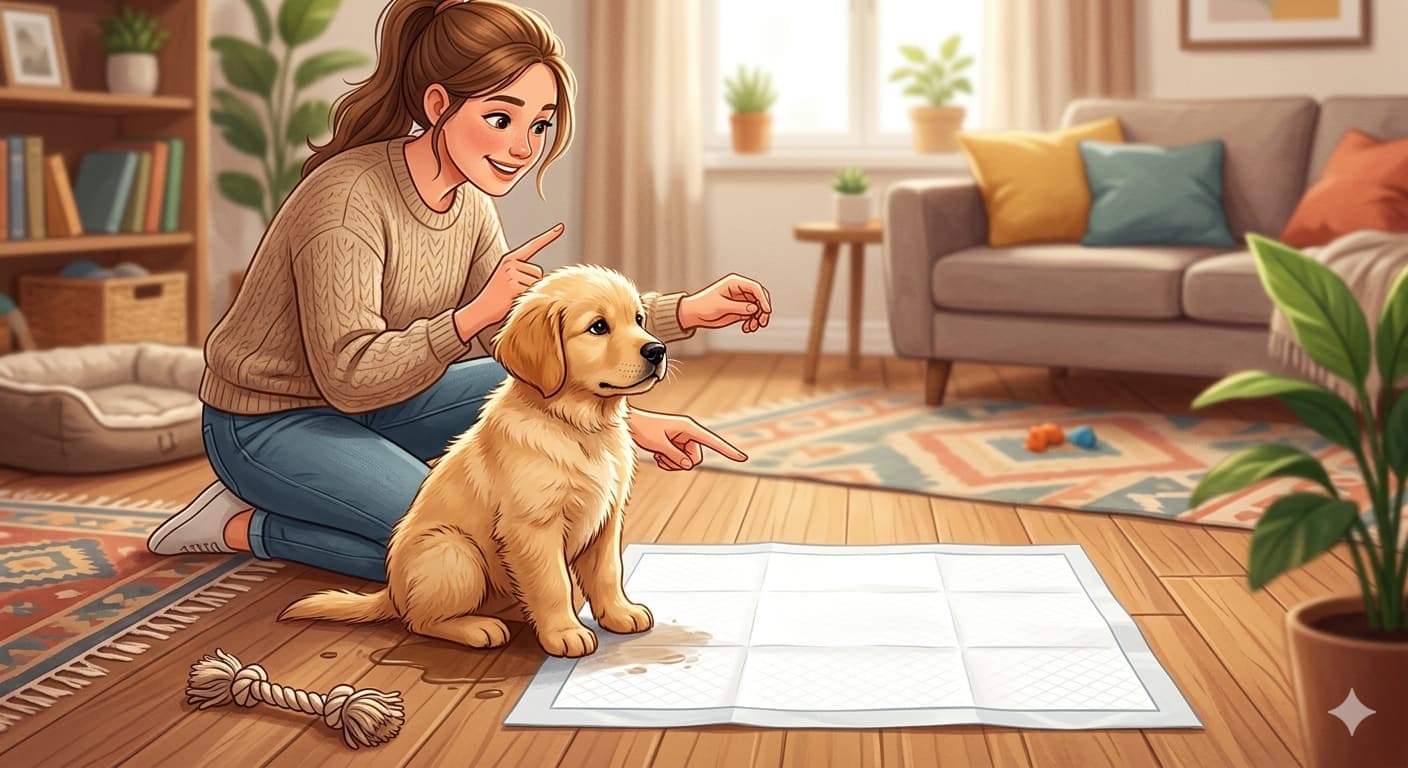
If your puppy refuses to pee on the pad, it can feel confusing—and a little frustrating—especially when you’re doing your best to train them. The good news is that many puppies go through this stage while they’re still learning where they’re supposed to go.
Sometimes a puppy refuses to pee on pad simply because the routine is still new to them. Puppies need time, consistency, and gentle guidance to understand what you expect.
If your puppy refuses to pee on the pad, try guiding them to the pad after meals, naps, or playtime, and reward them when they use it. With patience and positive reinforcement, your puppy will gradually build the right habit.
Understanding Why Puppies Avoid Pee Pads
When a puppy refuses to pee on a pad, it usually just means they’re still learning the routine. In the first days of training, it’s normal if a puppy won’t pee on the pad right away. Puppies rely a lot on habit and familiar smells, so it may take a bit of time before they understand where they’re supposed to go.
That’s where Puppy Training Pads help. When the pad stays in the same place and becomes part of your puppy’s daily routine, they gradually start recognizing it as their bathroom spot.
The Pee Pad May Be in the Wrong Location
Sometimes a puppy refuses to pee on pad simply because of its location. If the pad is in a busy or noisy part of the house, your puppy may avoid it. Most puppies prefer a quiet spot where they can relax and feel safe.
If your puppy won’t pee on pee pad, try moving it to a calmer corner and keep it there consistently. Many pet owners also rely on Disposable Pet Training Pads to keep the area clean while helping their puppy learn the right place to go.
Puppies Often Miss the Pad Due to Size or Placement
If the pad is too small or not placed well, your puppy won’t pee on pad consistently and may end up missing it. Young puppies are still learning control, so accidents can happen while they’re figuring things out.
Using larger Disposable Puppy Pee Pads gives your puppy more space and makes it easier for them to land in the right spot.
Inconsistent Training Confuses Puppies
Puppy training works best with a steady routine. If a puppy refuses to pee on pad, it may be because the schedule keeps changing. Puppies learn faster when they’re guided to the pad at the same key moments—after meals, naps, and playtime.
Keeping a consistent routine, along with dependable Best Puppy Training Pads, helps reinforce the habit and makes the training process smoother.
Your Puppy May Not Recognize the Pad Yet
Sometimes a puppy refuses to pee on a pad simply because they haven’t connected it with bathroom time yet. If your puppy won’t pee on the pee pad, try placing a slightly used pad underneath a fresh one. The scent can help your puppy understand where they’re supposed to go.
You can also explore training products from Cheetah Pets Supplies, which are made to support puppies as they learn this routine.
Too Much Space Can Lead to Accidents
Letting your puppy roam too freely at the start can lead to accidents. If a puppy won’t pee on the pad, they may just wander off and pick another spot in the room. During training, it helps to keep their space limited so they can clearly understand where they’re supposed to go.
Many pet owners also pick up their training supplies from an Online Pet Shop in Dubai, which makes it easy to find the tools they need while building good habits from the beginning.
Some Puppies Prefer Outdoor Potty Training
Some puppies simply prefer going outside. In these cases, a puppy refuses to pee on pad because they’re used to grass or soil when it’s time to go. If your puppy won’t pee on pad, try easing them into it by slowly moving from outdoor breaks to indoor pads.
Using Disposable Reusable Dog Pee Pads can make this transition easier while your puppy adjusts to the new routine.
Pee Pad Quality and Absorbency Matter
Poor-quality pads can make pee pad training frustrating. If the surface feels damp or uncomfortable, your puppy won’t pee on pee pad again and may start avoiding it. Puppies are sensitive to how things feel under their paws, so a dry, comfortable pad really matters.
That’s why many owners go for premium Disposable Puppy Pee Pads. With better absorbency, the pad stays drier and helps your puppy feel comfortable using the same spot again
Positive Reinforcement Works Better Than Punishment
If you’re asking yourself why my puppy won’t pee on the pad, the answer often comes down to how the training is done. Puppies learn best when they feel safe and encouraged—not when they’re punished for accidents.
When it comes to how to train puppy to use pee pads, patience and consistency matter the most. Guide your puppy to the pad regularly, and when they get it right, give them praise or a small treat. Over time, they’ll start linking the pad with a positive experience.
Using reliable Puppy Training Pads also helps by creating a clear, consistent bathroom spot for your puppy, which makes the whole training process smoother.
Also read: Dog Training Essentials: A Step by Step Guide
Common Reasons Puppies Avoid Pee Pads
Pad location is noisy
What Happened: Puppy avoids the area
Quick Fix: Move the pad to a quiet corner
Pad is too small
What Happened: Puppy misses the pad
Quick Fix: Use larger Disposable Puppy Pee Pads
Inconsistent routine
What Happened: Puppy gets confused
Quick Fix: Take them to the pad after meals and naps
Puppy prefers outside
What Happened: Puppy looks for grass or soil
Quick Fix: Gradually transition to indoor pads
Pad feels wet or uncomfortable
What Happened: Puppy won’t return to the pad
Quick Fix: Use high-absorbency Puppy Training Pads
FAQs
Why does my puppy pee next to the pad instead of on it?
This often happens when the pad is too small, placed in the wrong spot, or your puppy is still learning where to aim. It’s a common part of early training.
How can I encourage my puppy to use pee pads?
Guide your puppy to the pad regularly, especially after meals, naps, and playtime. When they use it correctly, praise them or offer a small reward. Keeping the pad in the same spot also helps.
How long does it take to train a puppy to use pee pads?
It varies, but many puppies begin to understand the routine within a few weeks, especially with consistent guidance.
Should I punish my puppy for not using the pad?
No. Punishment can confuse puppies. Positive reinforcement works better and helps build trust during training.
Why does my puppy shred or chew pee pads?
Puppies sometimes chew pads out of curiosity or boredom. Giving them toys or chewing items can help redirect that behavior.
Can puppies be trained to use pee pads permanently?
Yes. Many small breeds and dogs living in apartments continue using pee pads even as adults.
Also read: How to Choose Cat Litter for Kittens