


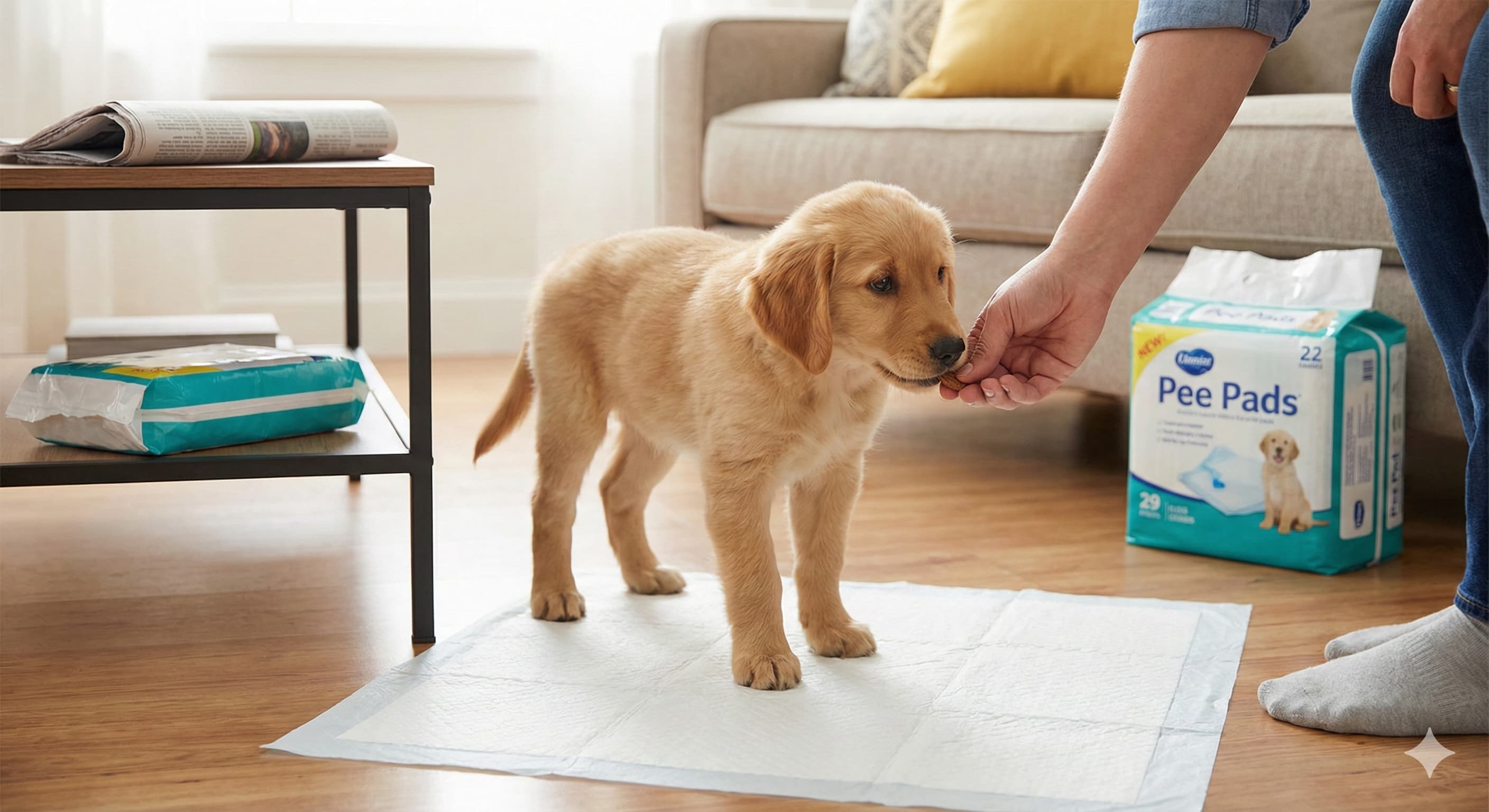
When you bring home a new puppy, one of the first challenges you’ll face is potty training. Many owners ask, “should you use pee pads to train your puppy?” Pee pads are convenient, especially for apartment living or bad weather, but they’re not without drawbacks. In this detailed guide, we’ll explore the pros and cons, discuss common mistakes, and share expert tips to help you choose the best training method for your furry friend.
The Case For Pee Pads
Potty training requires patience and consistency, and pee pads can make this process easier for many new pet parents. When deciding should you use pee pads to train your puppy, it’s important to understand their benefits in different living and lifestyle situations.
Convenience for Apartment Living
If you live in an apartment or high-rise, it’s often difficult to take your puppy outside multiple times a day. That’s where the question should you use pee pads to train your puppy becomes practical. Pee pads give your pup a designated spot indoors, eliminating the need for frequent outdoor trips and keeping your floors clean and odor-free.
Puppies have small bladders and can’t always wait for an elevator ride or a long walk. Having a pad available ensures fewer accidents and helps them develop early potty habits in a controlled space.
Ideal for Harsh Weather Conditions
When it’s raining, snowing, or extremely hot, your puppy may resist going outdoors. In such cases, asking yourself should you use pee pads to train your puppy makes perfect sense. Pee pads offer a safe and comfortable solution when the weather isn’t suitable for outdoor potty breaks. This can help keep your puppy consistent with their training schedule year-round.
Helpful for Very Young Puppies
For very young puppies who haven’t yet received all their vaccinations, outdoor potty training can expose them to diseases. That’s why many owners wonder, should you use pee pads to train your puppy temporarily until their vaccinations are complete. It’s a safe and hygienic choice during the first few weeks at home, helping puppies establish a potty area while staying protected indoors.
Great for Nighttime or Long Work Hours
If your puppy is too young to hold their bladder overnight, pee pads can help prevent accidents while you sleep. In these cases, should you use pee pads to train your puppy is answered with a yes, but only as a temporary backup. Puppies can use the pad when you’re asleep or away, which makes cleanup easier and reduces stress for both of you.
Support for Puppies with Limited Mobility or Health Issues
When puppies are recovering from surgery or dealing with health challenges, using Disposable Pet Training Pads can be a practical solution. They offer comfort, reduce the need for outdoor trips, and maintain hygiene. In these situations, pee pads serve as a compassionate, short-term training tool rather than a long-term habit.
Easy Cleanup and Maintenance
High-quality pads are leak-proof and odor-controlled, making them simple to manage. The Best Puppy Training Pads can absorb multiple uses before needing to be changed, keeping your space fresh. This ease of maintenance is one of the reasons many pet owners rely on pee pads during the early training phase.
The Case Against Pee Pads (The Risks)
While pee pads are convenient, they can also create confusion and long-term behavioral problems if not used strategically. Before deciding should you use pee pads to train your puppy, it’s crucial to understand the potential downsides.
Confusion Between Indoor and Outdoor Potty Training
The most common problem owners face is confusion. When a puppy learns that it’s okay to eliminate indoors, they may struggle to adapt to outdoor-only potty habits later. So, should you use pee pads to train your puppy if your end goal is outdoor training? Possibly not. The scent and texture of the pad can cause your puppy to associate similar indoor surfaces, like carpets, with a bathroom area.
Slower Transition to Outdoor Training
Using pee pads can delay the process of outdoor potty training. Many pet parents who ask should you use pee pads to train your puppy end up facing resistance when they try to move the habit outside. Puppies become dependent on the familiar surface and smell of the pads, making them reluctant to use grass or soil.
Potential Chewing and Shredding
Puppies explore with their mouths, which often leads to them chewing or tearing pee pads. If this happens, you may wonder, “should I use pee pads for my puppy at all?” Chewing not only makes a mess but can also be hazardous if your puppy swallows parts of the pad. Opt for thicker, reinforced pads or reusable cloth alternatives to prevent this issue.
Hygiene and Odor Issues
Even the Best Puppy Training Pads require frequent changes. Leaving them too long leads to unpleasant smells, bacteria buildup, and accidental tracking of urine throughout the house. Without proper maintenance, pee pads can do more harm than good by creating hygiene problems in your home.
Location Confusion: Playpen and Crate Mistakes
New owners often ask, “should you put pee pad in playpen?” or “can I put a pee pad in the crate?” The answer is typically no. Placing a pee pad in your puppy’s sleeping or play area teaches them that it’s acceptable to go to the bathroom where they rest or play, something you don’t want to encourage. It’s better to keep their potty spot separate from their living and eating areas.
Alternatives & Best Practices
If you’re still unsure about should you use pee pads to train your puppy, consider these effective alternatives and best practices that promote faster, cleaner, and more natural potty training habits.
Outdoor Training from Day One
The simplest and most effective method is to start outdoors immediately. Take your puppy out after waking, eating, or playing. Reward them with praise and treats every time they go outside. This builds a strong association with outdoor pottying and eliminates the confusion that can come from indoor pad training.
Crate Training for Bladder Control
Many new owners ask, “can I put a pee pad in the crate?” The answer is no. Crates are meant to mimic a den, and puppies naturally avoid soiling their sleeping area. By keeping the crate clean and taking your puppy outside regularly, you’ll encourage better bladder control and faster training success.
Supervised Indoor Play and Routine
When asking should you put pee pad in playpen, it’s important to create structure. The playpen should be for rest and play, not potty time. Instead, monitor your puppy closely and take them to the same outdoor spot at consistent intervals. This approach reinforces routine and predictability, which are key to success.
Use Real Grass or Synthetic Turf Mats Indoors
If outdoor trips aren’t possible due to apartment living or weather, consider grass or turf potty mats. These mimic outdoor textures and smells, making future transitions easier. It’s a great compromise for pet parents wondering should you use pee pads to train your puppy without forming bad habits.
Gradual Transition Strategy
If you’ve already started with pads, move them gradually closer to the door each week until they’re outside. This method teaches your puppy that the potty area is meant to be outdoors, easing the shift from indoor pads to outdoor grass.
Invest in Quality Pads and Supplies
If pads are part of your plan, choose premium options from a trusted Online Pet Shop in Dubai. Look for Disposable Pet Training Pads with strong absorbency, leak resistance, and odor control. High-quality products make training easier, cleaner, and more comfortable for your puppy.
Conclusion
So, should you use pee pads to train your puppy? The answer depends on your lifestyle, environment, and long-term goals. Pee pads are useful for young, small, or recovering puppies, and for owners who live in apartments or face extreme weather. However, they should always be viewed as a short-term training aid, not a permanent solution.
For best results, combine limited pee pad use with outdoor training, positive reinforcement, and consistency. By understanding your puppy’s needs and sticking to a structured schedule, you’ll set the foundation for a lifetime of good potty habits.
FAQs
How long should I use pee pads before trying to transition outdoors?
Most trainers recommend using pee pads for no more than 2-4 weeks. Once your puppy begins recognizing the pad as a potty spot, gradually move it closer to the door until it’s outside. Early outdoor exposure helps speed up the transition.
My puppy is chewing and shredding the pee pads. What should I do?
Try using pad holders or switching to reusable cloth pads that are harder to tear. Redirect your puppy’s chewing with appropriate toys and supervise them during pad use. If chewing continues, you may need to remove the pads entirely and focus on outdoor training.
Can I use pee pads just for nighttime?
Yes, but only as a temporary solution. Place the pad in a consistent location away from your puppy’s bed. As they mature and can hold their bladder longer, gradually remove the pad to prevent long-term dependence.
If I use pee pads, should I place them near the door or away from the door?
Start with a quiet area that’s easy for your puppy to access, but not too close to where they eat or sleep. When it’s time to transition outdoors, move the pad closer to the door in stages. This will guide your puppy naturally toward outdoor potty habits.
What is the single best alternative to using pee pads?
The best alternative is outdoor potty training combined with crate training. This method aligns with your puppy’s instincts, encourages bladder control, and builds long-term consistency. Reward your puppy with treats and affection every time they potty outside to reinforce success.
Also Read: The Benefits of Using Disposable Dog Pads: A Comprehensive Guide for Pet Owners